Adopt and inquire
Animals or openings listed with enough detail to act: photos, a short bio, and a form or phone number, so nobody has to hunt through email.
Websites for the groups Illinois Valley towns count on, like the food pantry, the church, the youth league, and the animal rescue. Donors, volunteers, and neighbors should know how to help on the first visit.
Why a website
A small nonprofit earns trust when the next step is obvious and the information is current.
Someone gets to you from a Facebook post, a Google search, or a flyer at the vet. They want to donate, volunteer, get help, adopt, or find out when the event is. If they can't tell where to go, or the animals and dates look old, they leave.
A Facebook page helps, but posts scroll away. Your own site keeps the adoption list, the donate button, the volunteer form, event details, and the story of your work in one place you control.
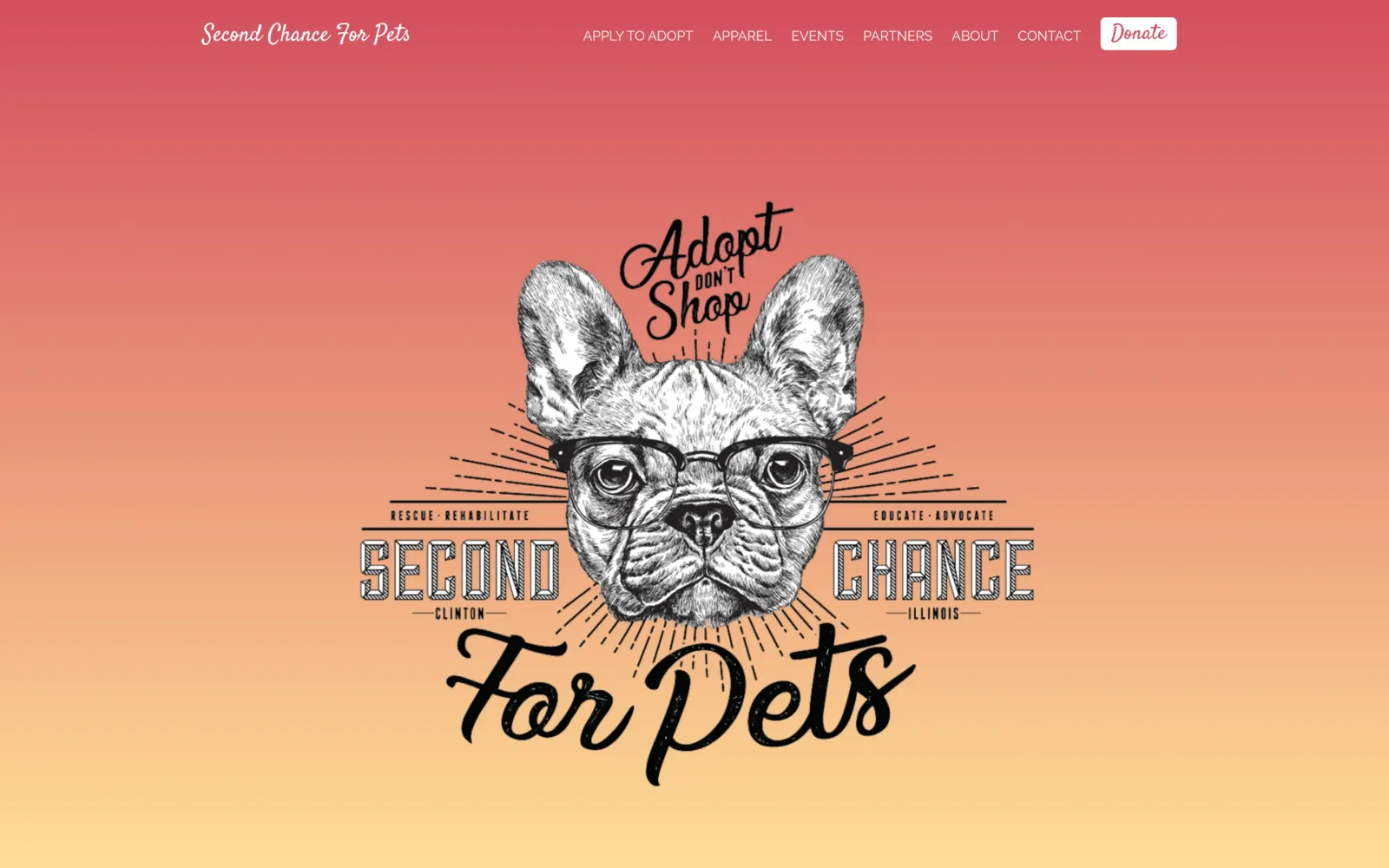
We build for small boards and busy coordinators. Second Chance for Pets in Clinton is a live example. You email a change and we publish it under managed care.
Built for nonprofit work
The pages a small Illinois Valley nonprofit actually uses, and nothing that sits empty.
A donate button people can find on a phone, for one-time and monthly gifts. We link or embed the giving tool you already use, like PayPal or Givebutter. Completed gifts and receipts stay in that tool.
Open roles, what each one involves, when you need people, and a form that goes to the right person. Nobody should have to dig for an email address to offer help.
Date, place, and how to sign up or just show up, readable on a phone. Fundraisers and community nights each get their own page.
Who you serve and what's changed lately, in everyday words, with photos you already have. Show what a gift or a volunteer shift does without making up totals.
A spot to thank the businesses that back you, with their logos and links. It gives sponsors a reason to come back next year.
Readable type, strong contrast, forms that work with a keyboard, and alt text on key images, so older donors and people using screen readers can use the site.
Who runs the organization, meeting notes if you choose to share them, and contact details that get updated when roles change.
Storytelling
People give and show up when they understand who gets helped and what changed.
Start with the mission in everyday words. Pair it with photos from your programs, a few short stories about an animal or a neighbor, and recent updates you can stand behind. Your own photos, even phone photos, beat stock images that could belong to any charity.
Put the impact next to the ask. If a gift buys food, vaccines, or event supplies, say so right beside the donate button. If you don't have a number to share yet, describe the work. That's enough.
Donations
A lot of donors find you on their phone. The donate button should be in reach of their thumb.
Put Donate in the header and again near the story of the work. Offer one-time and monthly giving through the tool you already use. You don't need a second checkout.
If you're a 501(c)(3), we say so next to the button, so donors know the gift may be tax-deductible.
Donation totals and receipts stay in your giving platform. Analytics shows how many people click Donate. MyDash shows your form submissions, like volunteer sign-ups and adoption inquiries, not completed gifts.
Day to day
A rescue or community group needs clear paths and a way to stay current without a full-time webmaster.
Animals or openings listed with enough detail to act: photos, a short bio, and a form or phone number, so nobody has to hunt through email.
Volunteer, contact, and event forms land in MyDash, where your team can see them without digging through inboxes. Log in with your email or Google.
Animals and events change every week. Old pages cost you fosters and donors. With managed care, you email the change and we publish it.
The homepage and key pages each lead with one next step. Other links stay on the page without competing for attention.
What to track
MyDash shows what comes in through your site. Gifts and RSVPs stay in the tools that handle them.
Adoption inquiries, volunteer sign-ups, and contact forms land in MyDash, so you see them without digging through email.
The MyDash lead tracker keeps volunteer, sponsor, and adoption leads in one list, with where each one came from, so you know which posts and pages bring people in.
Completed gifts stay in your giving platform, like PayPal or Givebutter. We link or embed that tool, and totals are read there.
How many people click Donate and which page they came from. It shows whether the button is easy to find.
If sign-ups run through a form we build, they show in MyDash. If you use Eventbrite or Facebook Events, count them there.
Why Viridian
We're in Peru, IL. You talk to Scott Monterastelli. Care plans keep the site current after launch.
How a nonprofit build runs
Same steps every time, scoped to what a small team can keep current.
We learn who you serve, which path matters most right now (adopt, donate, volunteer, or events), and what a good month looks like. You get a fixed-scope quote.
Scope + quoteWe pull the animals, stories, and event details you already have. You send what's missing, like board names, logos, and sponsor info.
Your wordsEach key page gets one main action. You review before anything is built.
Review firstMobile-first site, forms wired to MyDash, accessibility checks, and local search basics at launch.
Typically 2–6 weeksDomain setup, redirects if needed, a walkthrough, and your donate and event tools linked in.
Go liveMyDash shows your sign-ups, inquiries, and leads. Email or text changes and we publish them under your care plan.
OngoingLive examples
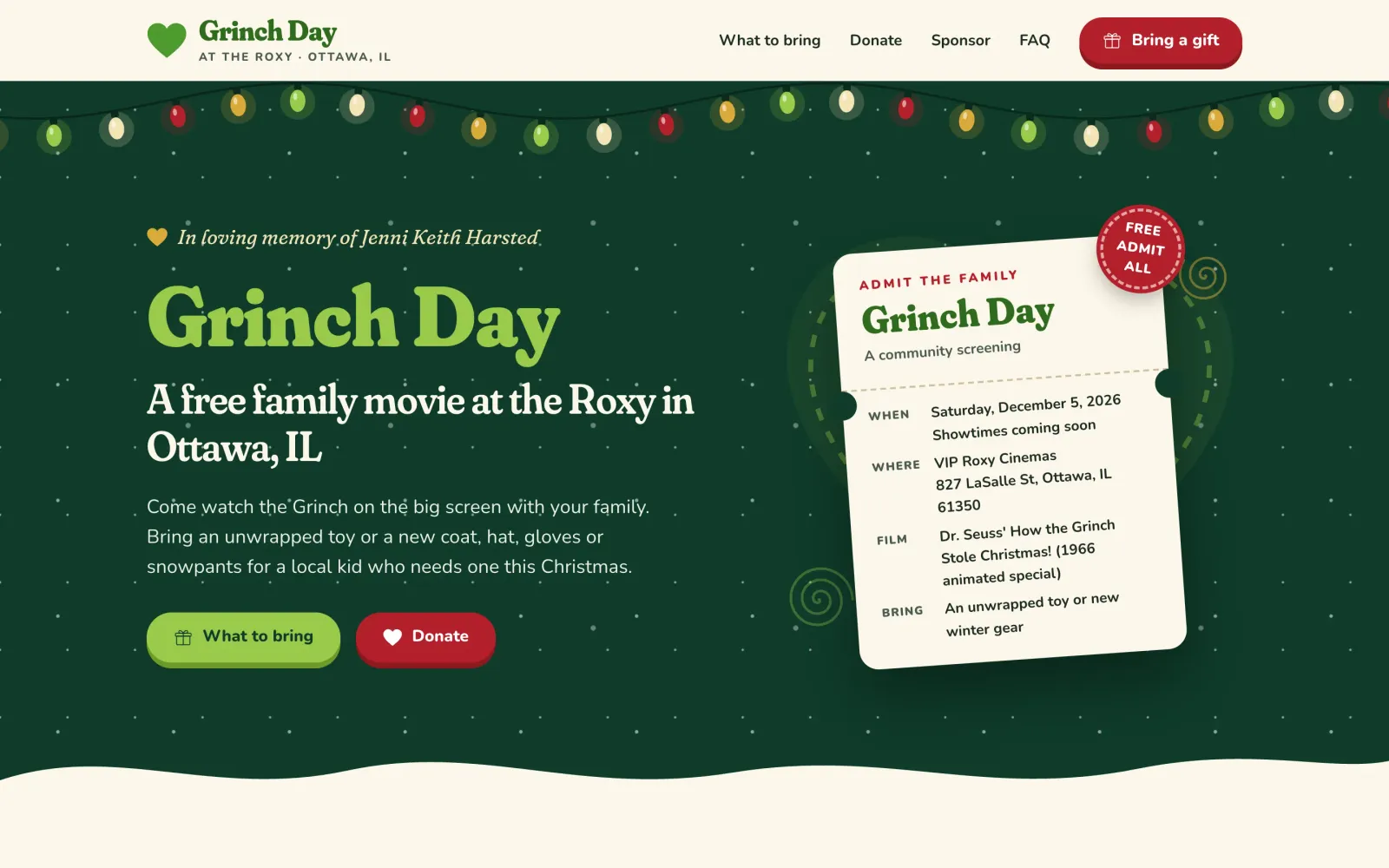
Second Chance for Pets in Clinton, and a free community movie night and toy drive in Ottawa.
FAQ
Yes. Second Chance for Pets is a live example on our work page. We scope the site to what a small team can keep current.
Email us the change and we publish it under Viridian-managed care. Bigger redesigns are quoted separately.
Yes. Any of your volunteers can email or text us a change, and we publish it under your care plan.
Updates, backups, security, monitoring, and changes you email us. See Website Care Plans.
No. MyDash shows form submissions and leads from your site, like volunteer sign-ups and adoption inquiries. Gifts and totals live in your giving platform. We link the two so donors can finish the gift.
Each event gets a page with the date, place, and how to sign up. Sign-ups can use a form we build, which shows in MyDash, or the tool you already use, like Eventbrite or Facebook Events. Volunteer roles work the same way, with a form that goes to whoever coordinates.
Your logo, mission statement, photos, current animals or programs, upcoming events, board names, and a login to your giving platform so we can connect it.
A typical site takes 2–6 weeks from kickoff to launch. You get a real timeline with your fixed-scope quote.
Have a project in mind?
A few quick questions, about two minutes. You'll hear back with next steps within 24 hours. Rather talk? Call (815) 220-5752.